
HOME > News
Can sample‑validated rails survive real‑site wind‑load cycles?
Rollersys implements multi‑dimensional pre‑qualification workflows for Movable Bracket Rail Outdoor Roller Blinds, combining cyclic wind‑impulse simulation, coastal‑salt‑spray ageing and offset‑mounting tolerance verification, uncovering sample‑hidden field‑performance risks well before bulk hardware shipments deliver to global facade‑construction projects.
1. Cyclic wind‑impulse simulation reveals progressive movable‑bracket fastening‑loosening risks
Sample validation uses static, zero‑vibration bench‑assembly. Real‑world exterior installations receive repeated alternating wind‑gust impulse loads. Recurring back‑and‑forth dynamic force transfers onto movable‑bracket fastening interfaces. Even correctly torqued screws develop incremental micro‑slip after thousands‑of‑wind‑cycle impacts. Over months or seasons, mounting hardware slowly loosens; bracket position drifts sideways, generating uneven rail‑alignment. Simple static sample assembly checks cannot predict this time‑dependent fastener‑relaxation phenomenon. Rollersys runs accelerated cyclic wind‑impulse lab‑simulation replicating real‑world gust spectra. Post‑test fastener‑retorque and bracket‑displacement measurement screens marginal‑fit bracket‑hardware assemblies, lowering on‑site rail‑misalignment failure probability for exterior sun‑shade deployments.
2. Salt‑spray combined thermal‑cycling assessment uncovers coating‑failure trigger‑points
Sample hardware sits inside temperature‑stable, low‑humidity lab environments. Many target projects locate in coastal, ocean‑adjacent zones. Movable‑bracket‑rail assemblies undergo combined attack: salt‑particle deposition together with large diurnal hot‑cold swings. Minor coating discontinuities at bracket punch holes, bending edges and screw‑hole chamfers become corrosion starting‑points. Visually intact samples may contain micro‑coating breaches invisible to visual QC, which only propagate into obvious rust after months of coastal‑site exposure. Rollersys executes combined salt‑spray plus thermal‑swing ageing testing for finished bracket‑rail assemblies. Edge‑zone corrosion‑resistance evaluation filters hardware batches with inadequate surface‑protection, preserving long‑term appearance and mechanical integrity for seaside building‑facade projects.
3. Offset‑mount tolerance validation guards against rail‑binding caused by building‑structure deviation
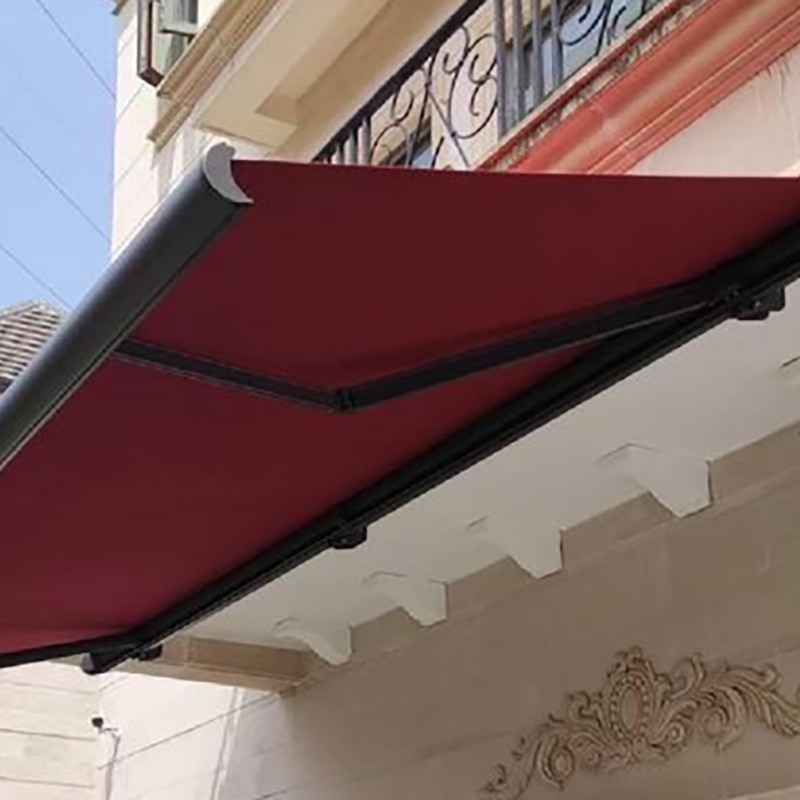
Sample‑stage assembly always works with perfectly parallel, ideal mounting‑datum conditions. Actual building facades rarely deliver theoretically‑perfect installation planes. Subtle wall‑projection offset, pillar mis‑alignment or concrete dimensional‑tolerance shift force movable brackets into skewed mounting states. If bracket‑rail system possesses very narrow offset‑compensation bandwidth, skewed installation introduces internal mechanical pre‑stress. Under wind‑load, pre‑stressed assemblies produce rail‑binding, blind‑fabric jamming and abnormal operating noise, even though every individual component passes standalone sample‑specifications. Rollersys carries out variable offset‑mount simulation covering realistic facade‑construction tolerance ranges. Functional‑smoothness testing under skewed mounting‑conditions defines practical installation‑compensation limits, supplying clear guidance for field‑installation subcontractors.
4. Rail‑bracket sliding‑interface endurance testing mitigates accumulated wear‑debris interference
Sample‑level inspection evaluates brand‑new, clean sliding‑contact surfaces. On‑site movable‑bracket rails continuously shift position under wind‑induced micro‑vibration. Repetitive relative movement between bracket slider and rail profile generates fine metallic wear‑debris. Mixed with airborne dust and rain‑borne grime, these particles build‑up inside sliding‑grooves. Over time, debris accumulation raises sliding friction, obstructing free bracket displacement. This progressive fouling‑related malfunction will never show‑up on fresh‑component sample‑testing. Rollersys completes long‑duration sliding‑interface endurance cycling with simulated outdoor‑grime contamination. Post‑cycle movement‑resistance measurement validates anti‑fouling performance of rail‑bracket mating‑surfaces, minimising field‑jamming complaints for long‑term outdoor sun‑shade operation.
5. Multi‑unit stacked‑load testing verifies multi‑bay continuous‑rail system stability
Most sample‑tests evaluate short single‑bay rail segments. Large commercial facades deploy multi‑bay continuous movable‑bracket‑rail runs connecting multiple blind‑units. Superimposed wind‑load transfers along rail splice‑joints; cumulative mechanical stress concentrates at splice‑connection points. Splice‑joint hardware that performs adequately on isolated short sample‑sections may experience local deformation under cascaded multi‑bay load‑transfer. Rollersys assembles full multi‑bay rail test‑rig to simulate superimposed wind‑load distribution. Splice‑joint deflection and locking‑integrity get verified under combined multi‑unit‑loading, avoiding joint‑deformation incidents on large‑scale facade‑shade projects.
6. Project‑tied hardware‑validation dossiers satisfy facade‑project third‑party audit requirements
Cross‑border commercial‑facade tender audits demand aggregated hardware‑performance documentation: wind‑cyclic‑test logs, salt‑spray ageing‑reports, offset‑mount tolerance‑validation records. Stand‑alone prototype‑sample test‑certificates carry no audit‑validity for serial‑production hardware batches. Without lot‑specific English‑language technical‑dossiers, movable‑bracket‑rail deliveries risk site‑acceptance hold‑up and delay overall facade‑construction milestones. Rollersys compiles unified project‑linked documentation‑packages incorporating above‑mentioned test‑results. Third‑party‑ready traceable archives eliminate documentation‑gap‑driven project‑stall‑risks for global outdoor‑shade wholesale and facade‑contractor partners worldwide.
Related News
- How well do Car Window Roller Blinds hold up under real‑vehicle compound stress?
- How Can Roller Shutter Doors With Alarm System Improve Security and Operational Efficiency?
- Why Track-Guided Exterior Roller Shades Outperform Ordinary Outdoor Shades In Wind Resistance & Full Sealing?
- How Do Awning-Type Exterior Roller Shades Balance Wind Resistance, Ventilation & Long-Term Outdoor Service Life?
- Why Are Bank Roller Shutter Doors Essential for Modern Financial Security?
- Zip Screen: Defining the Next Generation of Interior Aesthetic Screens
Leave me a message